Mom Keychain SVG: Acrylic Design for Embroidery
As a designer who bridges the gap between digital graphics and tactile needlework, I approach every new file with a specific question: will this actually stitch out well, or is it just a pretty screen image? When evaluating the Mom, Keychain SVG, Acrylic Keychain SVG, my perspective shifts from simple vinyl cutting to complex textile application. While this asset is marketed primarily for Cricut and Silhouette users creating acrylic blanks, its clean lines and sentimental typography offer significant potential for the embroidery community. However, translating a graphic intended for laser cutting into a machine embroidery design requires a critical eye for structure, density, and end-use practicality.
First Impressions: Visual Weight and Stitch Translation
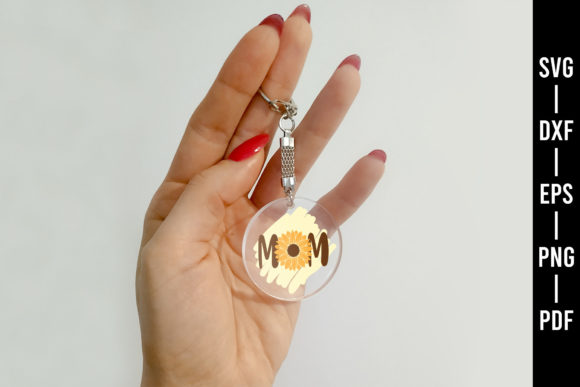
My initial assessment of this digital embroidery file focuses on its visual hierarchy. The word "Mom" carries an emotional weight that demands legibility. In the SVG format, the vectors are crisp, which is excellent for tracing in digitizing software. For an embroidery project, this clarity is vital. Unlike organic, hand-drawn illustrations that forgive minor stitching errors, typographic designs like this require precision. The mood is modern yet timeless, suggesting it belongs on products that balance utility with sentimentality.
I immediately visualize this not just as a standalone motif, but as a component of a larger handmade product. The shape is likely compact, making it ideal for small hoop sizes. However, because it was designed for acrylic keychains, the aspect ratio might be tall or narrow. As an embroiderer, I have to consider how this verticality interacts with fabric grain. On a tote bag design, this orientation works beautifully as a pocket accent. On a cap, however, the vertical stack might need resizing or re-digitizing to fit the curved brim area without distorting the letterforms.
Real-World Application: The Custom Sweatshirt Test
To truly judge the viability of the Mom, Keychain SVG, Acrylic Keychain SVG for commercial use, I mentally place it on a high-demand item: a custom embroidered sweatshirt for Mother’s Day. This is a staple for any Etsy seller or small shop product line. In this scenario, the design serves as a chest logo or sleeve cuff detail rather than a massive back print.
When adapting this graphic for sweatshirt embroidery, the fleece texture becomes the primary variable. Sweatshirt fabric has a nap that can swallow fine details. If the original SVG features thin, single-stroke lines meant for vinyl, they must be converted to a robust satin stitch or a triple running stitch to remain visible against the fuzzy background. I would also evaluate whether adding a subtle fill stitch background or a border frame would help the text pop. Without these adjustments, the design risks looking amateurish after washing. For a personalized gift, the finish quality is what builds customer trust; a design that sinks into the fabric feels cheap, whereas one that sits proudly on top feels boutique-grade.
Navigating Fabric Constraints and Technical Limits
While this design is versatile, there are specific environments where I would advise caution. Because the source material is an Acrylic Keychain SVG, it may contain intricate internal cutouts or extremely small serifs that are perfect for lasers but disastrous for needles.
- Stretchy Fabrics: On performance wear or thin knits, rigid typographic designs can cause tunneling. You must verify that your stabilizer choice matches the design's density. A tear-away might not suffice; a cut-away is often safer for maintaining the shape of the letters during wear.
- Tiny Lettering: If the SVG includes secondary text (like "Est. 2024" or a name) at a very small scale, test it rigorously. Text under 6mm often requires specialized fonts or simplification. Standard thread colors and needle sizes cannot replicate vector sharpness at microscopic scales.
- Dark Fabrics: Vinyl designs rely on contrast through material opacity. Embroidery relies on thread sheen. Before committing to a dark navy or black garment, run a printable mockup or a physical test stitch to ensure your white or metallic threads provide enough contrast. Sometimes, a light-colored outline is necessary to define the edges against dark cloth.
- Curved Surfaces: Using this on caps or curved pouches requires checking the distortion. What looks straight on a screen may bow unpleasantly when wrapped around a cylinder. You may need to apply an arc effect in your digitizing software to compensate for the curve.
Commercial Value and Brand Consistency
For creative entrepreneurs and craft business owners, the value of the Mom, Keychain SVG, Acrylic Keychain SVG extends beyond a single sale. It represents brand consistency. If you sell matching acrylic keychains and embroidered apparel, using the same base graphic creates a cohesive collection. This cross-media compatibility is a massive selling point for buyers looking for coordinated gifts.
However, professionalism lies in the adaptation. Do not simply auto-digitize the SVG and expect retail-ready results. Customers can tell the difference between a thoughtful applique design integration and a lazy conversion. By taking the time to adjust stitch density and pull compensation specifically for textiles, you elevate the perceived value of your merchandise. This attention to detail is what separates a hobbyist from a professional apparel decorator. Furthermore, always confirm the licensing terms of the original SVG before selling finished items or marketing it as part of your proprietary design assets. Ethical sourcing protects your business reputation.
Designer’s Checklist for Successful Execution
Before loading this design into your machine for a client order or inventory batch, run through this practical evaluation list. These steps mitigate risk and ensure the finished product meets both aesthetic and functional standards.
- Verify Hoop Compatibility: Measure the actual dimensions of the SVG. Ensure it fits comfortably within your machine’s maximum stitch area with adequate margin for hooping. Do not assume standard sizing.
- Test on Scrap Material: Never stitch the final version first. Use a scrap of the exact fabric and stabilizer combination intended for the project. Check for puckering, registration issues, or thread breaks.
- Audit Small Details: Zoom in on the digitized file. Are there stitches shorter than 1mm? These can cause needle breaks or fabric perforation. Lengthen them or remove unnecessary anchor points.
- Contrast Check: View the design in grayscale or black-and-white mode in your software. If the design loses definition without color, it needs more structural stitching or texture variation.
- Wash Test: If this is for baby embroidery or kitchen linens that require frequent laundering, wash and dry your test swatch. Ensure the stitches hold up and the fabric doesn't distort around the dense areas.
- Mockup Validation: Create realistic digital previews for your listings. Show the design on the actual product type (e.g., tote, hat, tee) so customers understand the scale and placement. Accurate representation reduces returns.
Final Thoughts on Versatility
The Mom, Keychain SVG, Acrylic Keychain SVG is a deceptively simple asset that punches above its weight class when treated with respect. It bridges the Crafts and Graphics categories effectively, provided the maker understands the translation process. Whether you are creating a heartfelt holiday embroidery piece, a branded accessory for your shop, or a custom embroidered patch, success depends on honoring the physics of thread as much as the aesthetics of the vector. By applying these professional insights, you transform a basic digital download into a premium textile product that resonates with buyers and stands the test of daily use.